A polish, not a miracle

Fades light scratches and swirl marks. Won't pretend to fix a deep one.

NanoPolix is a reusable micro-polishing cloth built for the everyday damage that actually happens in parking lots — fine swirl marks, light key-tap scuffs, water spots, and mild oxidation. It works by gently leveling the clear coat around a shallow mark, not by "filling" or "fusing" anything. For a scratch you can catch a fingernail on, that's a body shop job, and we'll say so.

Reusableone cloth, many uses
Noharsh chemical solvents
30-dayreturn window
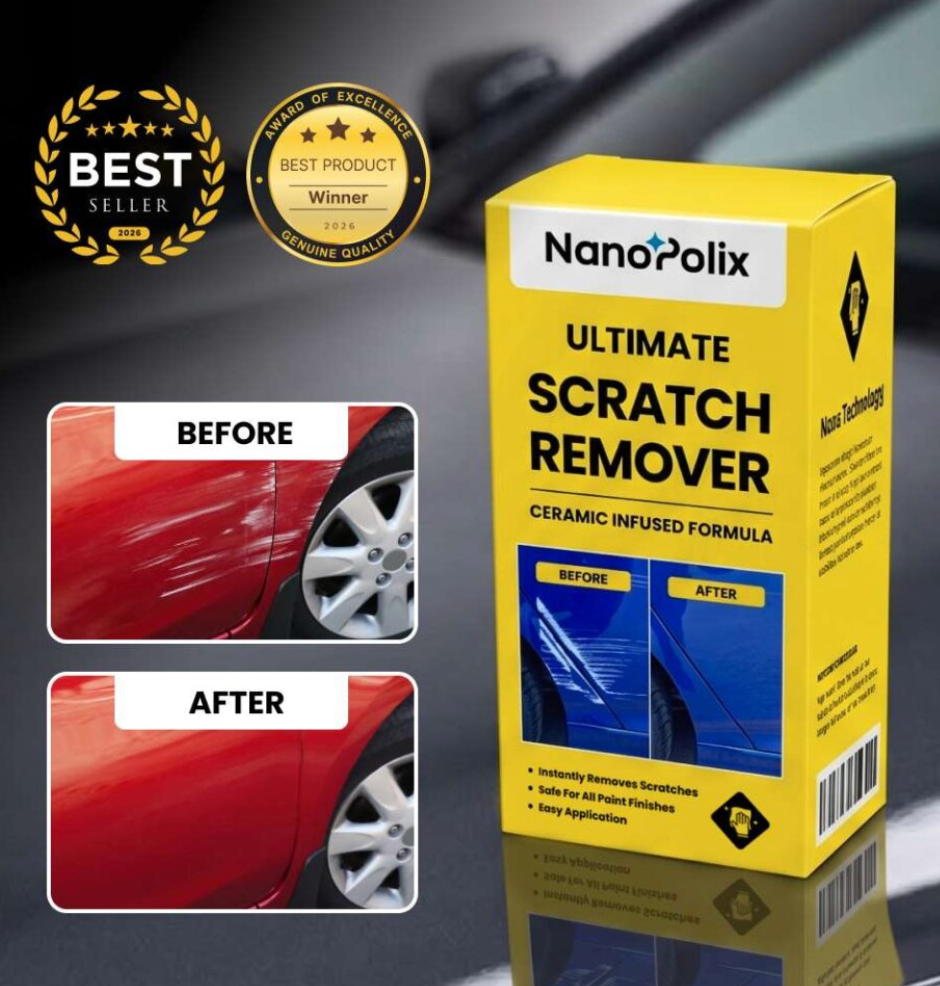
The part most scratch-cloth ads skip

What NanoPolix can — and can't — do

Reasonable to Expect

  • Noticeably reduces fine swirl marks and light surface scuffing
  • Helps clear up mild water spots and light surface oxidation
  • Improves the look of shallow key-taps and fingernail-depth marks around door handles
  • Reusable — the same cloth works across multiple sessions

Not What This Is

  • Won't remove a scratch you can catch a fingernail on — that's gone through the clear coat
  • Can't fix dents, chips, or damage down to primer or bare metal
  • Doesn't "fill" or add material — it levels the surface around a shallow mark
  • Results vary by paint type, scratch depth, and how the cloth is used

A quick test: run a fingernail across the mark. If your nail catches on it, that scratch has gone past the clear coat, and no wipe-on cloth is going to fix it — that's a job for a body shop or a proper touch-up paint kit.

Three steps, a few minutes per panel

How to actually use it

1

Clean the surface

Wipe the area dry and free of dust or grit — polishing over debris can make fine scratches worse, not better.

2

Work it in circular motions

Rub the cloth over the mark in small, consistent circles. This is what levels the surrounding clear coat, not a chemical reaction.

3

Wipe and check

Buff away any residue and see how much the mark has faded. Light marks often improve in one pass; others take a few sessions.

What's actually going on in the cloth

The honest mechanism

Micro-Abrasive Polish

Fine polishing particles gently level the clear coat around a shallow mark, the same basic principle behind any quality rubbing compound — just built into a reusable cloth.

Non-Abrasive on Healthy Paint

Formulated to work on the raised or uneven edges of a shallow scratch without stripping surrounding clear coat.

Safe Across Paint Colors

Works the same way regardless of paint color, though results are often easiest to see on darker or metallic finishes.

Reusable

One cloth is built to handle multiple sessions, not a single use — rinse and let dry between applications.

Minimal Residue

Designed to wipe clean without leaving a heavy haze — though a final buff pass is still worth doing on any polish.

No Harsh Solvents

Built around a mechanical polishing action rather than a strong chemical stripper, which is easier on surrounding trim and rubber seals.

One cloth, straightforward pricing

Get NanoPolix

Buy 1 Get 1 Extra NanoPolix

Enough for regular touch-ups on one vehicle

$17.48
BUY NOW
Household Pack

Buy 3 Get 4 Extra NanoPolix [Best Offer's]

One for each car in the driveway

$13.98
BUY NOW

Before you buy

Common questions

Will NanoPolix remove my scratch completely?

It depends on the depth. Fine swirl marks and light surface scuffing often fade significantly or disappear. A scratch that catches your fingernail has gone past the clear coat, and a polishing cloth can't rebuild missing material — that's a job for touch-up paint or a body shop.

How long does NanoPolix take to see a difference?

Light marks often show visible improvement within one or two passes. Deeper or older marks may need several sessions, and some won't fully resolve with polishing alone.

Is it safe on all paint types?

It's formulated to be gentle on clear coat generally, but if you have a matte or satin finish, test on a small inconspicuous area first — matte finishes can be more sensitive to any polishing compound.

Can I reuse the same NanoPolix cloth?

Yes. Rinse it after use and let it air dry fully before the next session. Replace it once it feels stiff or the polishing surface has visibly worn down.

What about water spots and light oxidation?

Those tend to respond well to the same polishing motion, since they're also surface-level rather than a deep gouge in the paint.

Fix what's fixable. Skip what isn't.

Shop NanoPolix